Discogel: Back Pain Relief Without Surgery
Most people believe chronic back pain leaves two options: live with it, or go under the knife. There is a third option — one most patients never hear about.
Discogel is a minimally invasive injection that relieves chronic low back pain without surgery, without general anaesthesia, and without a hospital stay.
What Is Discogel?
Discogel is a gel made of 96% pure ethanol combined with a radiopaque agent. It is injected in tiny quantities (0.5–0.8 ml) directly into the nucleus of the damaged intervertebral disc, using a fine needle guided by real-time X-ray imaging.
Once inside the disc, the gel causes the nucleus to shrink — reducing the pressure it exerts on the disc’s outer ring and on surrounding nerve roots. The result is pain relief, often felt within the first hours to days after the procedure.
Discogel is sometimes referred to as gel discectomy or gel disc plasty.
How Is the Procedure Performed?
The procedure is straightforward and takes only a few minutes:
- A fine needle is inserted into the affected disc under complete aseptic conditions
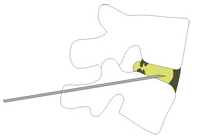
- Real-time X-ray guidance (fluoroscopy) ensures millimetre precision — the gel is radiopaque, meaning it is fully visible on imaging
- A small amount of gel (0.5–0.8 ml) is injected into the disc nucleus
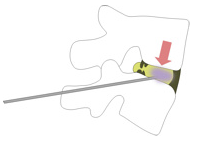

- The patient is awake throughout — only local anaesthesia is used
- Immediately after the injection, the patient can move freely with no restrictions
- The patient goes home the same day
Important: It is critical that the procedure is performed by a surgeon with specific experience in the method, under strict aseptic technique and X-ray guidance.
What Results Can You Expect?
Published clinical data — including a systematic review of 772 patients — confirm that Discogel is both safe and effective for well-selected candidates.
Pain relief: 80–90% of patients experience significant pain reduction within 3 months.
Speed of relief: In most cases, improvement begins within hours to a few days. In some patients, it develops gradually over 3–6 weeks.
Long-term results: A prospective 1-year study found that pain scores in the discogenic pain group dropped by 53–66% and remained stable throughout the follow-up period.
No surgical risk: If Discogel does not achieve the desired result, surgery remains fully available — and published evidence confirms that prior Discogel treatment has no negative effect on the outcome of subsequent surgery.
Is Discogel Safe?
Discogel has one of the lowest complication profiles of any spinal intervention. The gel itself is non-toxic — it is safe even if it comes into contact with nerve tissue. Unlike other intradiscal treatments, the use of ethanol also carries a theoretically lower risk of infection.
Because the procedure uses only local anaesthesia, it avoids the risks associated with general anaesthesia. There is no surgical incision, no implant, and no postoperative recovery phase.
Who Is a Candidate for Discogel?
Discogel produces the best results in a specific, well-defined patient profile. Correct patient selection is the key to its success — and part of what makes the outcome so predictable.
Discogel IS appropriate for:
- Chronic low back pain (lumbar discogenic pain) in younger patients
- Pain that is recurrent — comes and goes over time
- Pain that has not responded to physiotherapy or conservative treatment
- Cases where MRI confirms disc degeneration that is mild to moderate — where the disc nucleus is still structurally intact enough to treat
Discogel is NOT appropriate for:
- Sciatica (pain radiating down the leg) — this is a symptom of large disc herniation, not discogenic pain
- Large disc herniations — the nucleus is no longer contained, making injection ineffective
- Advanced disc degeneration — when the disc has lost its natural structure and the nucleus is essentially absent
If your symptoms include leg pain (sciatica), or if your MRI shows advanced disc damage, Discogel is not the right treatment for you. These cases are treated very successfully with Microdiscectomy or Spinal Fusion, depending on the nature of the problem. Dr. Karnezis will review your imaging and recommend the most appropriate option.
Why Discogel Is Not the Right Choice for Everyone — And Why That Matters
There is a specific reason why Discogel does not work in advanced disc damage: when the disc is severely degenerated, it has lost its natural structure and the nucleus has essentially disappeared. There is no longer a contained space into which the gel can be injected and do its work.
The same applies to large herniations — the nucleus has already migrated beyond the disc boundary, and sciatica (leg pain), not back pain, is the predominant symptom. These cases require a different surgical approach.
Being transparent about what Discogel can and cannot do is not just honest — it is what makes the results so consistent for the patients who are right for it.
Frequently Asked Questions
Will I need general anaesthesia?
No. The procedure is performed under local anaesthesia only. You are awake throughout and the injection is painless.
Do I need to stay in hospital?
No. You go home the same day, immediately after the procedure is complete.
When will I feel the effect?
In most cases, relief begins within hours to a few days. In some patients it develops gradually over 3 to 6 weeks.
What if Discogel doesn’t work for me?
If the procedure does not produce the desired result, surgery is still an option. Clinical studies confirm that Discogel has no negative effect on the success of subsequent surgical treatment.
Is Discogel a permanent solution?
The shrinkage of the disc nucleus is a lasting structural change. Results are durable, though the natural ageing of the spine continues regardless of treatment.